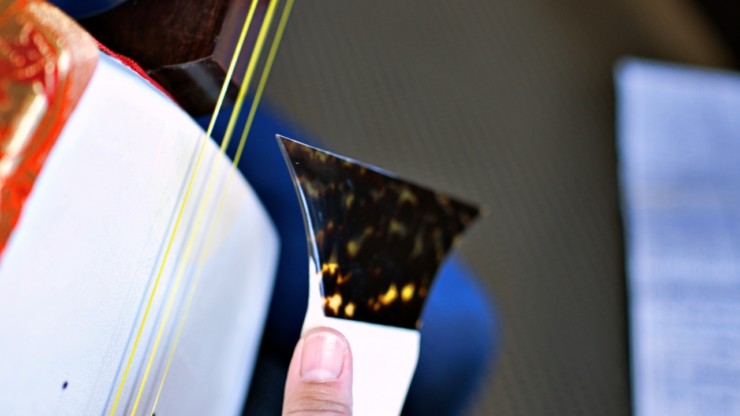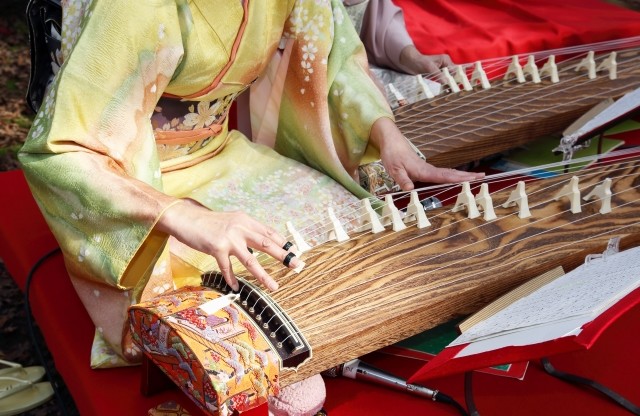

Have you ever wondered how your country’s music was born? Although the exact origin of Japanese music and performing arts is not known, the famous Japanese myth “Ama-no-Iwato Myth” also describes song and dance. Let’s take a look at the “Ama-no-Iwato Myth” for a moment. Ama-no-Iwato” is a cave made of rocks. One day, the Sun Goddess, unable to bear…
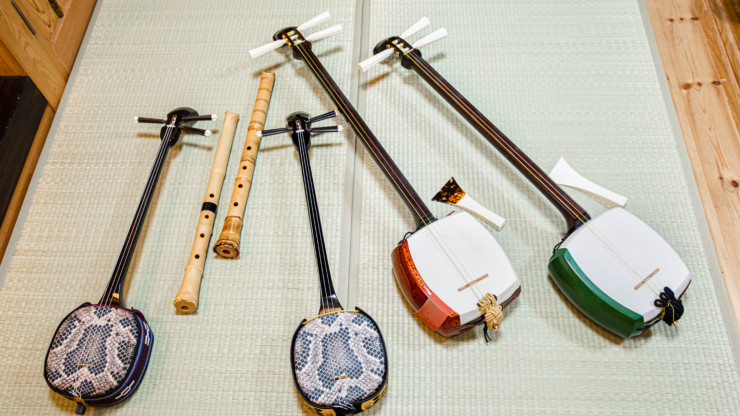
In your country, what kind of particles are used to count things? In Japan, a wide variety of particles are used to count things. There are so many different types of particles that even Japanese people sometimes make mistakes. In this article, I would like to introduce how to count Japanese musical instruments. First, let’s start with the shamisen. The…
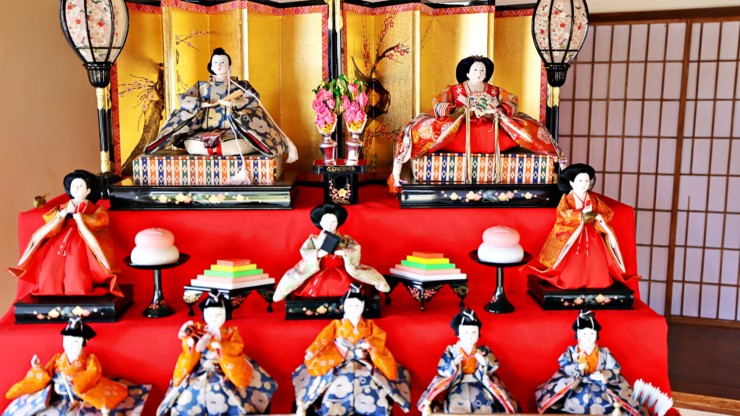
Have you ever heard of the Japanese traditional culture “Doll’s Festival(Hinamatsuri)”? Hinamatsuri is a uniquely Japanese annual event celebrated on March 3 every year. It is a day to wish for the healthy growth and health of girls. Families with girls display hina dolls and eat sweets and food unique to Hinamatsuri. Hina Ningyo is a Japanese doll wearing traditional…
At first glance, traditional Japanese instruments (Wagakki) and fortune-telling (Uranai) may seem to have little direct connection. However, these two elements undeniably symbolize different facets of Japanese culture. Surprisingly, from ancient times to the present, traditional Japanese instruments and fortune-telling intersect at various points. Shintoism and Music Traditional instruments are frequently employed in ceremonies at shrines and temples. These are…
What kind of proverbs do you have in your country? In the past, this blog has introduced you to such proverbs as “If the wind blows, the bucket shop will make money,” “Peaches and chestnuts take three years to bear fruit, persimmons take eight years,. In this article, we will introduce three more Japanese proverbs related to Japanese instruments. The…
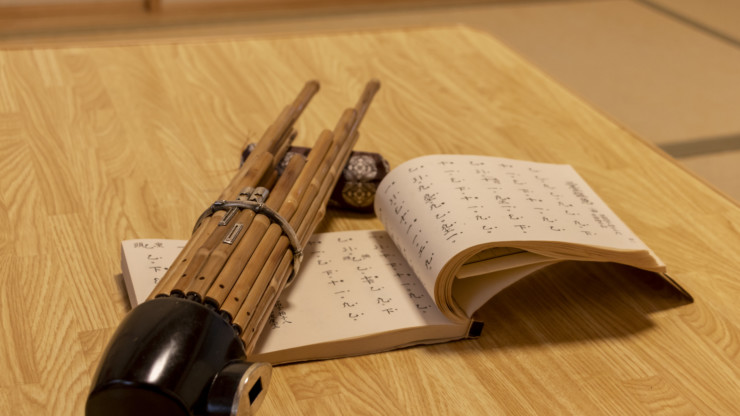
Have you ever played the harmonica? Harmonicas are inexpensive compared to other instruments, and they are also an easy instrument to start playing. The charm of the harmonica is that it allows you to freely trace melodies and play chords. Now, the harmonica is classified as a free reed instrument, but there is also a Japanese instrument classified as a…
The shamisen is deeply rooted in Japanese culture, appearing in many songs and stories. However, the reality that the skin of animals like dogs and cats is sometimes used in its construction also exists. In this article, we will examine the relationship between the shamisen and animal skin, focusing on customs from ancient to modern Japan. ◇Between Beauty and Sacrifice…
The history of Japanese musical instruments is long, and descriptions of them can be found in many books. Japan’s oldest full-length novel, which has been translated into dozens of languages and is famous throughout the world, also contains descriptions of Japanese musical instruments. The work is called “The Tale of Genji”. It depicts the aristocratic society of the Heian period,…
Japanese culture offers a rich tapestry of experiences that engage all the senses, among which the sense of smell holds a unique place. For lovers of traditional Japanese musical instruments, or “wagakki,” these unique scents can add another layer of depth to their musical pursuits. In this blog post, let’s explore some of the distinctive aromas that define Japanese culture.…
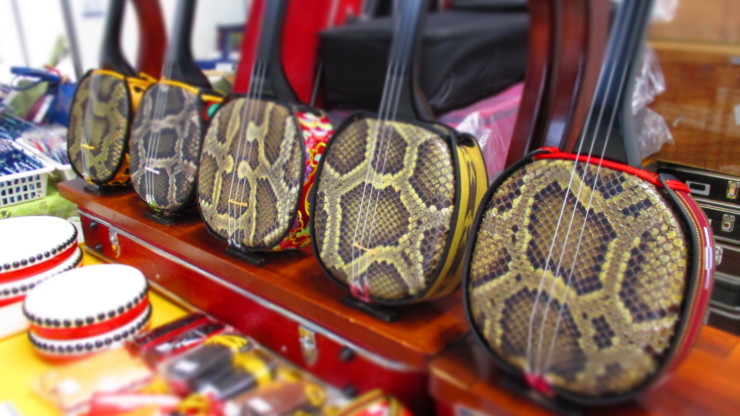
Do you know what sanshin are made from? The one that has the most impact is probably the snake-patterned skin. In this article, we will introduce the materials of each part of the sanshin. Let’s start with the most eye-catching skin. The sanshin has a strong image of snakeskin, but not many people know what kind of snake is used.…